
America’s Unfinished Awakening
by Norman Franklin
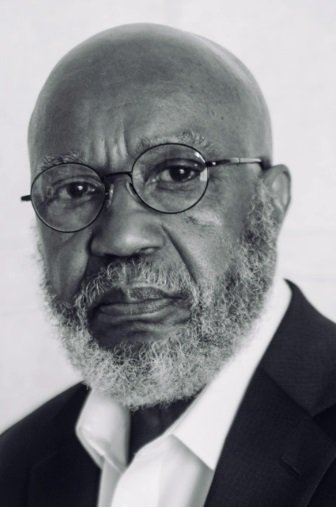
Norman Franklin
Great awakenings. The framing implies a period of heightened spiritual awareness. Awakenings follow a pattern —complacency, crisis, fervor pitched preaching, widespread personal conversion, and sometimes social reform that outlasts the emotional moment. America has experienced four awaken ings beginning in the 1700s. Historians debate over the naming of the third; the authenticity of the fourth is contested.
The first, 1730-1740, was sparked by Jonathan Edwards and George Whitefield’s revivalist preaching across the colonies. They emphasized personal conversion and the emotional experience of grace. The message of grace—the power of grace and personal conviction— was filtered through the lens of socioeconomic priorities. The Awakening failed to transform the social hierarchy and the economic system of chattel slavery.
An authentic Awakening should move adherents from private piety to public ethics. The commands of the Savior should resonate. Love your neighbor as you love yourself. There is no partiality with God. A reshaping of social and political policies would be an expected result from a heightened spiritual experience. This is the foundational landing of the current movement to return our Nation to its Christian founding. A foundation built on sand and not the solid Rock Christ is the solid Rock.
A note for clarity. Historian Joseph Tracy coined the term Great Awakening a century after the events of the 1730s. In his eponymous history/ treatise in 1842, Tracy grouped the separate events as one spiritual movement. An increase in spiritual awareness was awakened across the colonial landscape but not as a single coordinated movement. The Great Awakening is an invented framing of spiritual piety.
The Second Great Awakening began in the last decade of the eighteenth century. From 1790 to 1840, spirituality intensified. There were camp meetings, and an exponential growth of Baptist and Methodist churches. A result congruent with the context of spiritual awakenings was the birth of reform movements.
The abolitionist movement questioned the morality of chattel slavery. The slave labor plantation economy of the South competed with the wage-intensive industrial economy of the North for dominance in the global markets. A Civil War that divided families and divided the Nation brought an end to slavery in 1865. The freed slaves and their descendants remained shackled by a race-based ideology that assigned social value well into the twentieth century. Other reform movements spawned by this Second Great Awakening were women’s rights and prison reform. Women achieved suffrage in 1920.
The debates over the Third Great Awakening are about boundaries and classifications. When did it start and when did it end? Is it distinct from the second or is it a continuation? It is not a dispute over whether religious awakening happened. These are the normal low-stakes historians’ quarrels every era experiences.
In the mid-nineteenth century, Moody’s urban revivalism, the Social Gospel, the missionary movement, the Holiness and Pentecostal movements knit the spiritual fiber of America into a mosaic of religious diversity and situational Christian ethics. The Awakening failed to move the culture’s religiosity from private piety to public application.
The Third Great Awakening runs concur rent with the construction of Jim Crow, the betrayal of Reconstruction, the Plessy v Ferguson SCOTUS ruling, and the legal and social entrenchment of segregation in the South. We keep trying. But deflecting the pain of truth-debridement led to the metamorphosis of spirituality. The Fourth, but contested, Great Awakening is endemic to that transformation. The era of the Fourth Great Awakening —1960s to 1980—encompassed the youth-driven Jesus Movement, the maturing of the countercultural Jesus Movement into organized evangelism, political mobilization championed by the Moral Majority, and the rise of Ronald Reagan, a conservative Republican, as the face of religious politics.
The Jesus Movement mirrored Awakening theology through its pop-culture inclusive ness. The music, arts and the informal worship portrayed a relational Jesus to its adherents. Grace was experiential and without society’s racial hierarchy. That hope was spiritualized when the Movement matured into organized evangelism. With Jesus there is no partiality, and He will fix the injustice when He returns. That He will fix it is doctrinal, but Jesus confronted injustice in real time. Leaving injustice, oppression, and maltreatment of the poor, the immigrant and the hungry is an eschatological escape from accountability.
I will conclude with the grouping of the Moral Majority—a misnomer, moral relates to principles of right and wrong in behavior— Ronald Reagan as the political vehicle for the movement, and the conflated voice of Christianity, Evangelicalism, and Christian patriotism that noise broadcast and social media. Rather than remedy systemic injustice, we reframed the aberrations as a slight moment in the Nation’s exceptional history narrative.
The Moral Majority politicized the evangel ical demographic into a conservative voting bloc. Jerry Falwell’s founding energy was to oppose the loss of tax-exempt status for segregated Christian schools. Abortion and family values were added for religious capital. Ronald Reagan, the quintessential Republican and face of the Conservative Right, proved to be a contradiction—an opportunist who plays to his base of support.
Reagan viewed racial injustice as a tumor on imperfect individuals not a systemic flaw. His father, Jack Reagan, refused to let his sons stay at a Dixon hotel once he learned it wouldn’t admit Black guests, and pulled them out into the cold rather than accept the exclusion. Ronald Reagan generally treated racism as a matter of individual character; law having already fixed the formal problem. He was skeptical of federal remedies as government overreach. Can he serve two masters? It pushes against Jesus’ warning about divided loyalty.
He chose Philadelphia, Mississippi — the exact town where three civil rights workers were murdered in 1964 in a case that remained a live national symbol — as the location to open his general election campaign. In his speech, he used the phrase “I believe in states’ rights.”
We have returned to that resistance language in today’s religious political culture. State legislators freely gerry mander voting districts. SCOTUS has returned power to state jurisdic tions. The Awakenings allowed personal piety and public repentance to remain separate distinc tives—a failure Cone’s work names directly. A consistent conviction that runs through theolo gian James Cone’s work, particularly The Cross and the Lynching Tree, is the idea that theology cannot be separated from the ethics of those who claim service to a deity, nor can it be applied in a vacuum. If there is a Fifth Great Awakening, an aware ness of structural sin blindness should be the spiritual aim.