
Let the Word Go Forth
by Christopher A. Etienne
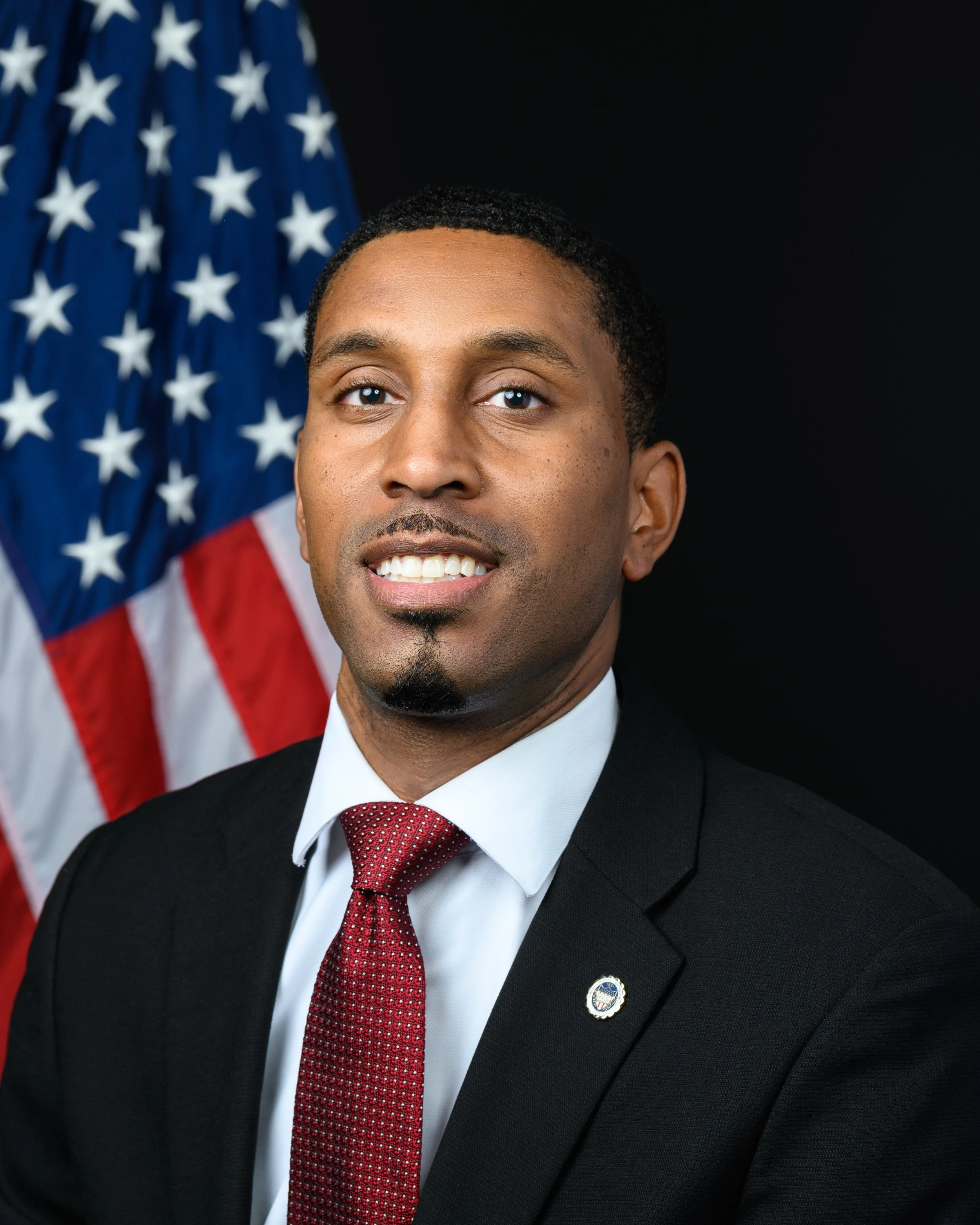
Christopher A. Etienne
The late U.S. President John F. Kennedy, then a U.S. Representative from Massachusetts, quoted the eloquent words of the late U.S. Senator Daniel Webster from Massachusetts, which are inscribed above the Speaker’s rostrum in the U.S. House of Representatives, during his address to the Eastern Massachusetts Division of Student Councils Convention in Watertown, Massachusetts, in 1950. Representative Kennedy stated, “High on the wall of the House of Representatives in Washington, D.C., so that everyone can see, are written words we should remember: they were from a speech by a distinguished senator from our native state of Massachusetts – Daniel Webster: ‘let us develop the resources of our land, call forth its powers, build up its institutions, and promote all of its great interests and see whether we also in our day and generation may not per form something worthy to be remembered.’” Indeed, Senator Webster chal lenged all Members of the U.S. Congress, both in the U.S. House of Representa tives and the U.S. Senate, to have a spirit of public duty that would leave a lasting legacy for We the People of the United States of America in the North, South, East, and West.
To be clear. Contrary to the viewpoints of the cyn ics, critics, capitulators, and conspiracy theorists of the dangers of form ing a more perfect Union. The American people need honest and efficient leaders with a global perspective that will unite the States from the highest mountain to the lowest valley. The American people expect and deserve better from their public officials.
Occasionally, the American people can sense when they are being passed from pillar to post because of the poor decision-making from some Members of Congress. The self-serving, learned behavior among some Members of Congress needs to stop. The late Dr. Carter G. Woodson, a distinguished scholar and Founder of Black History Month, argued in January 1944, “A chosen leader never looks out for himself [or herself]. Only the superimposed leader takes this position.” As a result, the mission and vision of some professional politicians should not be to enact laws that would create animosity, antagonism, and unrest among the constituency, but rather to enact laws that shall invest in pro grams to promote the eco nomic upward mobility for individuals and families across the country, the education of our youth, making higher education more accessible and affordable for students to gain the skills and training to compete in the global economy, to name a few. These are some of the issues that shall bring us together.
President Kennedy’s address before the Irish Parliament in Dublin in 1963 discussed that the desire for world peace and freedom, through the United Nations, cannot be achieved without the combination of hope, confidence, and imagination. It also cannot be achieved without the courage of the smaller nations. President Kennedy argues, “Great powers have their responsibilities and their burdens, but the smaller nations of the world must fulfill their obligations as well.” How true that is in our Democratic society in the United States. Let the word go forth to the North, South, East, and West of the United States that democracy must be practiced in all States, not a few States, by all public officials, not a few public officials, to respect each other and to protect the Constitutional rights of all citizens, not a few citizens. The large states have their responsibilities and their burdens; how ever, the small states must fulfill their obligations of upholding the pillars of the Preamble to the U.S. Constitution – “The Blessings of Liberty to our selves and our Posterity.”
Moreover, President Kennedy also eloquently affirmed in his address to the Irish Parliament, “The problems of the world cannot possibly be solved by skeptics or cynics, whose horizons are limited by the obvious realities. We need men [and women] who can dream of things that never were and ask why not. It matters not how small a nation is that seeks world peace and freedom… ‘the humblest nation of all the world, when clad in the armor of a righteous cause, is stronger than all the hosts of Error.’” As a result, some of our small states need to be clad in the armor of empathy. As Henry David Thoreau wrote in his 1854 book entitled Walden, “There are a thousand hacking at the branches of evil to one who is striking at the root.” Indeed, we have to focus on the root – the root causes of the attacks on personal rights, economic rights, and politi cal rights, to name a few. And we cannot move for ward as a country unless we first understand the causes.
To be clear. The word empathy. It is important that this word not become a slogan, or another popular political phrase, but a policy, a way of life. U.S. President Barack Obama’s argument from his More Perfect Union speech in 2008 is still true at this moment. President Obama argued, “I believe deeply that we cannot solve the challenges of our time unless we solve them together, [North, South, East, and West], unless we perfect our union by understanding that we may have different stories, but we hold common hopes; that we may not look the same and we may not have come from the same place, but we all want to move in the same direction – toward [the road that will Secure the Blessings of Liberty to our selves and our Posterity].
Fret not yourself because of evildoers. Let the word go forth to the North, South, East, and West of the United States of America. These are extraordinary times. And we face extraordinary challenges. Nevertheless, we shall overcome the extraordinary times and challenges we are facing with a strong and stub born faith. As a result, we shall set a new and better course for America. In the inspiring words of the late U.S. Vice President Hubert H. Humphrey, then a U.S. Senator from Minnesota, to the Uni versity of Pennsylvania Graduating Class of 1977, “And as we do, we will move closer to fulfilling the promise of America – a life with dignity in the pursuit of happiness in a free society for our [citizens] and for those throughout the world. As Franklin Delano Roosevelt so dramatically noted during one of the [tragic] periods of our nation – ‘The only limit to our real ization of tomorrow will be our doubts of today. Let us move forward with a strong and active faith.’”