
by Norman Franklin
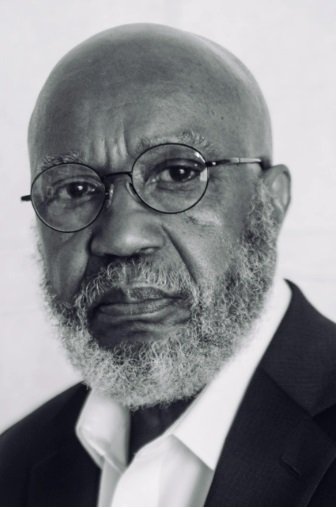
Norman Franklin
There is a familiar cadence in the march of time. The remix of an old song retains the rhythmic character of the original. The unfolding contrivance of policies and legislation that restrict the right to vote rhymes with history. It is a reminder of the dark milieu of the Jim Crow and segregation era—same tactics, different voices.
It is always about dominance— political power, wealth, and control. The new verses, the new voices are religious—return the nation to bible principled governance. And in this ideation the boundaries between religion and politics are indistinguishable.
Leaders—business, social, and political— execute measures, once considered discriminatory in context and character with impunity. Moral rightness is the premise. Returning governing authority to Statehouses allows for their value-based legislation. The number of gerrymandered legislative districts increases, the grip tightens, and Black voting strength is diluted. The pattern rhymes.
In 1890, Mississippi implemented literacy tests and the poll tax to inhibit Black voters. By 1910, Black vote registration in Mississippi and Alabama was under 2%.
The current tactics—proof of citizenship and ID requirements, and the DOJ voter- roll demand are echoes. The FBI seizure of Fulton County ballots—nearly 700 boxes of 2020 election records were removed—is use of a federal agency for a personal vendetta. The stolen election myth. Georgia’s results were contested.
The 1964 Freedom Summer voter registration drive was a major civil rights campaign to increase Black voter participation. It challenged the exclusion of Black Americans from voting in Southern states. Registrars accepted fewer than 10% of the applications. In August 2025, Georgia completed the cancellation of 471,000 registrations. Approximately 150,720 (32%) of the canceled registrations were associated with African American voters.
There is more rhyme. But that is not a reason for accepting iterations of history without pushback. There should be lessons learned that lead to unity of the one nation’s narrative. These last two shared are egregious aggressions with poignant lessons to learn.
During the 1960s, at the zenith of social advocacy, the FBI conducted counterintelligence and propaganda smear campaigns against Black leaders. Malcolm X, Dr. M.L. King, Jr, the Black Panthers and the Southern Christian Leadership Conference (SCLC) had their movements shadowed, their phone lines tapped, and disinformation disseminated among its members. These instances are not this writer’s liberties—it’s documented history. And it is an open playbook.
Congresswoman IIhan Omar, (D.Minn,) has been an outspoken critic of the Trump administration. She is a Somali-born naturalized American citizen and repre sents the 5th Congressional District. Omar has repeatedly suffered indignant suggestions that she return to where she came from. There is an unsubstantiated claim that she committed immigration fraud. Tom Homan, White House border czar, and former acting director of ICE confirmed that an investigation of Omar was opened in September. She is running for re-election in the midterms. Federal agents conducted a pre-dawn search on Omar’s Washington home on October 19.
The 2024 Garland era memo that prohibited investigations that harm or discredit candidates was rescinded by AG Pam Bondi in February. The Hatch Act, a federal statue, remains. The statue prohibits using official authority to influence an election. The raid on Omar’s home just 22 days before the November election, well, it’s a thin-line gray area hinging on the intentions of the DOJ.
It’s the same song, new verses, still voter intimidation. After the 1965 VRA, Black registration rose from about 35% to nearly 65% in the South. Backlash still mobilizes voters. The response by this college educated generation of African Americans is equally resilient as their civil rights era parents and grandparents.
On October 15, students at NC A&T State University, Bennett College and UNC Greensboro marched to an off-campus polling site. Early voting sites were not available on campus. The HBCU students walked the 45-minute journey to an off-campus early voting site, cast their votes, and walked the 45-mintue journey back to campus.
Backlash still mobilizes Black voters.