
The Double-sided Coin of Diminished Historical Consciousness
by Norman Franklin
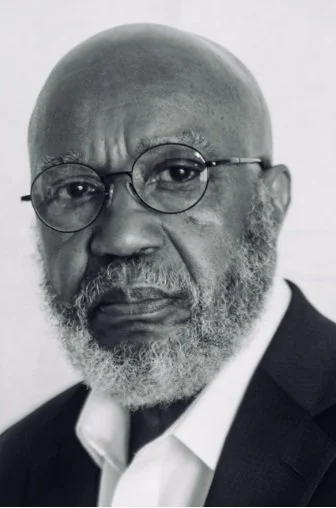
Norman Franklin
The shift in historical consciousness was subtle. The stealth ideological rebranding evolved through decades of refined narratives of our history. White America interprets history through the lens of inherited ortho doxy and its social constructs. A post-racial conflict interpretation is trending in Black America’s thought sectors. The millennial generation and those following view incidents of social injustice and acts of racial aggression as isolated occurrences. They do not identify a pattern.
The refined narratives of history rebranded historical memory— American exceptionalism without the stains of injustice. The post-racial conflict interpretations of Black America move on parallel tracks. The gear is in reverse. Together these perspectives trap America into an asymmetric historic amnesia. An ominous position with reciprocal damage and diminished potential for the one America we hope for. We see it playing out in the political, judicial, and social arenas.
The aggressive rollback of policies, programs, and legislative acts implemented over decades of equality-consciousness are now red flagged. They are framed as justifiable and necessary to restore common sense to America. The dismantling of DEI policies juxtaposed with the rise in numbers of Black American college graduates, obscures the regres sive patterns of systemic injustices. Incidents of racial conflict are viewed as isolated occurrences. It often triggers a step back for reflective intellectualism.
A rhetorical observation trending among scholars, professionals and artists is “when did you know that you were Black?” The awareness of being Black triggered by a racial encounter carries with it historical weight. The nuance rests in what is inferred by Black. It’s deeper than melanin. Does it mean racial identity, history, lived experience? The intersection of the subjectivity of being Black and the lived promise of America is foregrounded by the cultur ally affirmed social hierarchy. The systemic patterns of exclusion and acceptance, too often based on skin color, are inescapable. Voting power remains vulnerable.
The gerrymandering of districts designed to weaken or eliminate Black and Brown voting power is flagrant. The 1965 Voting Rights Act significantly limited voter discriminatory practices. Three Supreme Court rulings over a fifteen-year period effectively disemboweled the Act’s enforcement authority.
In 2013 Shelby County v. Holder invalidated the coverage formula under Section 4 (b). It suspended Section 5 preclearance. Brnovich v. Democratic National Committee, in 2021, narrowed the application of Section 2. In 2026, Louisiana v. Callais released the floodgates of congressional redistricting. Governor Jeff Landry by executive order suspended the U.S. House May primary elections following the April Supreme Court ruling.
It was justified. A corrective for government overreach. Justice Alito writes, “Allowing race to play any part in government decision making represents a departure from the constitutional rule that applies in almost every other context.”
Through the lens of inher ited orthodoxy, America approves. It moves the nation back toward a commonsense approach to equality and one America. The decades of corrective policies have brought equal opportunity. We do not need to enforce policies that punish one ethnicity to advance another that has been systemically hindered—these policies are outdated.
This asymmetric amnesia has evolved over decades of curated narra tives of exceptionalism. And parallel decades of interpretation through the “We Have Overcome” lens.
It can be cured. It will involve recon necting memories with reality. A consistent dose of accurate history can address the underlying condition.