
The Rhythm and Reason of Our Times
by Norman Franklin
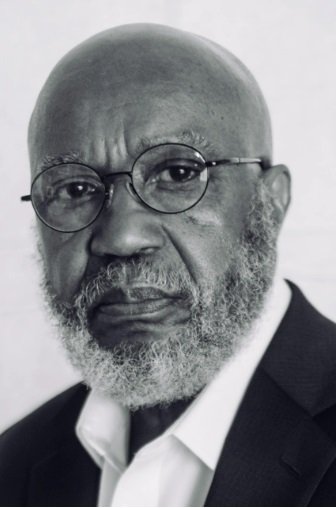
Norman Franklin
We hear the noise. It’s loud. His tory rhymes—weaponized fears, concentrated wealth, managed scarcity, the disciplining of the marginalized. Echoes of unresolved tensions.
The unresolved tensions are centuries old. Their subcutaneous residence appeases a society that is uncomfortable with responsibil ity because reckoning demands it. America would rather scrub its his tory. Rather than celebrate grit and resilience, it removes the evidence of racial violence, social oppression, and political complicity in structuring a system of injustice. These 250 years of democracy have convulsed with atrocities against humanity. We can not present this experiment as only American exceptionalism.
The premise—a model for the world: successful democratic governance pursuing equality and justice within demographic diversity. Those who would replicate the model may be unprepared to manage the fault lines of tension.
The question becomes—does America want to share the wisdom of the experience, the shared sacrifices of the oppressed and the lessons learned by the oppressors? Will they show the healing power of truth or the face of dominance that rewrites, reshapes, and renames—chattel slavery becomes social engineering, Jim Crow becomes law and order, and concentrated wealth becomes divine order?
These are questions that echo loudly in the policies of the Trump administration. They are heard in the protests in urban and small town America. History rhymes. History rehearses. Resistance takes to the streets.
Legislative moves, engineered by claims of election fraud, will restrict access to the polls. It doesn’t signal a learned lesson but retrenchment. Poll tax and literacy tests that once selectively restricted access to the polls becomes limited early voting and fewer polling places, challenges to the credibility of mail in ballots, and driver’s license required to validate the right to vote.
The decision to dismantle the Department of Education invokes ominous memories of separate but unequal schools. The return policy and decision making to state autonomy removes federal oversight; state legislatures have shown their ideological alignment with the Trump administration policies. The eager ness to dismantle Diversity, Equity, and Inclusion (DEI) programs is the fault-line of racial tension—a zero sum mentality.
Swift enactment of legislation to penalize DEI’s mention in programs and contract narratives signals a tec tonic shift away from reckoning with past systemic inequities.
The direction of the country reflects less of a desire to implement the lessons and wisdom of our struggles to be a nation of equal justice and more of a desire to reintroduce shelved policies proven to be antithetical to our ‘one nation’ creed.
There is a housing crisis in America. Policy decisions, couched in the recommendations of Project 2025, restrict access to affordable housing and exponentially increases the number of the unsheltered. Access to decent, affordable housing was one of the core findings of the 1968 Kerner Commission Report.
In the decades that followed its release, bipartisan efforts to reckon with the inequity was government policy. Under the current administration partisanship is a casualty of government efficiency. The affordable housing crisis is a problem manufactured by liberal democrats. History rhymes in politics with entrenched power dynamics, ideological fusions, and unresolved tensions.
As we approach the 250-year celebration of our nation’s founding, the myth of divine destiny threads the polishing of the optics of American exceptionalism. It undergirds the whitewashing of history, the rewriting of history narratives, and the removal of images of chattel slavery, Jim Crow lynchings, and government complicity in systemic racism.
The protesters in the streets, the marchers in resistance to policies give us hope. History rehearses. Protesters take to the streets to register their feeling, to exercise their First Amendment right of free expression. Their rights of dissent.
National Guard troops have at times been deployed to safeguard constitutional rights such as in Montgomery and Birmingham and at other times to suppress demonstrations. Masked ICE agents resemble occupation forces dispatched by an administration deaf to dissent.
A major flash point is immigration. An echo of the Civil Rights era. The immigrant is ostracized, devalued, demoralized, and denigrated with derogatory labels. Another lesson from our experience missed. Another misrepresentation—but we will have a polished America to celebrate the 250 year commemoration.
Once we clear our throats and sweep away the confetti, my hope is that we restore the forbidden images, allow history to breathe with the flaws and grandeur of the American experiment.
It’s not perfect. It’s a work in progress.