
The Vanishing Small Towns Tour
By Christin Bell
Environmental Protection Specialist | Terra on the Bench™ Studios
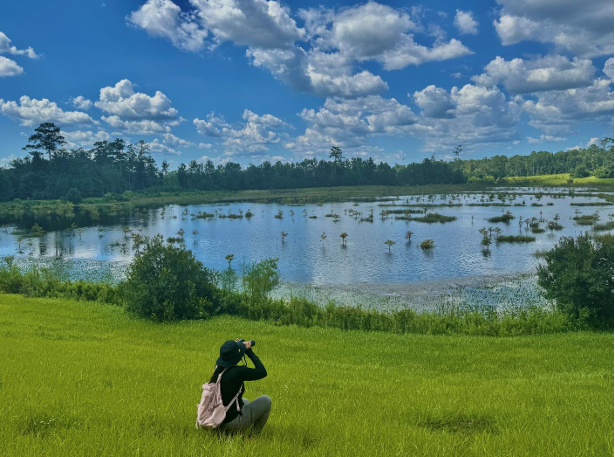
Across the United States, small towns are not disappearing all at once. They are thinning. The process is gradual, structural, and often invisible unless you know what to look for. Traveling through rural corridors in the South and Midwest, the pattern is consistent: closed mills, drained wetlands, aging infrastructure, and economies that no longer align with their landscapes.
These places are not failing because residents lack resilience. They are declining because land use, industry, and environmental systems have been misaligned for decades.
In parts of rural Florida, particularly inland communities away from coastal tourism and major metro centers, the signs are clear. Former citrus-processing facilities sit idle. Small paper and timber operations have consolidated or shut down. Groundwater-dependent towns face increasing stress as aquifer withdrawals rise and rainfall patterns shift. Wetlands that once buffered drought and flooding are fragmented or drained, reducing ecological and economic stability simultaneously (Florida Department of Environmental Protection [FDEP], 2023; U.S. Geological Survey [USGS], 2022).
This kind of decline is often framed as economic, but it is environmental at its core.
Buffalo experienced a similar trajectory decades earlier. Industrial contraction along the Great Lakes dismantled the city’s manufacturing base, leaving behind brownfields, population loss, and disinvestment. What differentiates Buffalo from many small towns today is timing. The city endured collapse before climate pressures accelerated, before water scarcity became a defining issue, and before ecological restoration entered mainstream planning conversations.
Florida’s small towns do not have that buffer.
Unlike Buffalo, which sits on one of the largest freshwater systems in the world, many rural Florida communities depend on stressed aquifers and highly managed watersheds. Declining rainfall reliability and increased extraction for urban growth place these towns in direct competition with expanding metro regions (USGS, 2022). Where Buffalo’s challenge was reinvention after industrial loss, Florida’s challenge is sustainability under environmental constraint.
There is also a difference in land permanence. Buffalo’s abandoned infrastructure remains physically present, making redevelopment possible. In Florida, environmental degradation is often irreversible. Once wetlands are filled or aquifers are contaminated by saltwater intrusion, recovery is uncertain and costly (FDEP, 2023).
What connects these places is not nostalgia. It is structural neglect.
Small towns across the country are treated as expendable buffers—spaces to extract from, pass through, or ignore. When industries leave, there is rarely a transition plan. When ecosystems degrade, responsibility is diffuse. Environmental decline becomes normalized, then invisible.
Buffalo’s current resurgence is often framed as a success story, but it is better understood as a warning. Recovery required decades, public investment, and a reckoning with land misuse. Many rural towns today are entering the same phase, but under more severe environmental pressure and with fewer economic tools.
The lesson is not that decline is inevitable. The lesson is that ignoring environmental limits accelerates it.
If small towns continue to be excluded from environmental planning, they will not vanish dramatically. They will erode quietly, one closed facility, one drained wetland, one compromised water source at a time. Buffalo has already lived through this process. The rest of the country is now repeating it—under less forgiving conditions.
References
Florida Department of Environmental Protection. (2023). Florida’s water resources and watershed management overview. https://www.floridadep.gov
U.S. Geological Survey. (2022). Groundwater availability of the Floridan aquifer system. https://www.usgs.gov
U.S. Environmental Protection Agency. (2021). Brownfields and land revitalization in post-industrial cities. https://www.epa.gov
Notes from the Field
Observed conditions include inactive industrial facilities, reduced water levels in managed wetlands, and limited new infrastructure investment across multiple states. These conditions align with documented regional trends in rural population decline and land-use change.
About the Author
Christin Bratton is an Environmental Protection Specialist and the founder of Terra on the Bench™ Studios, a creative collective focused on environmental policy, justice, and applied observation through media projects including E3O Files, Your Friend Terra, and The Bench.