
Dr. Charles R. Drew: Helped to Organize the Red Cross Blood Banks
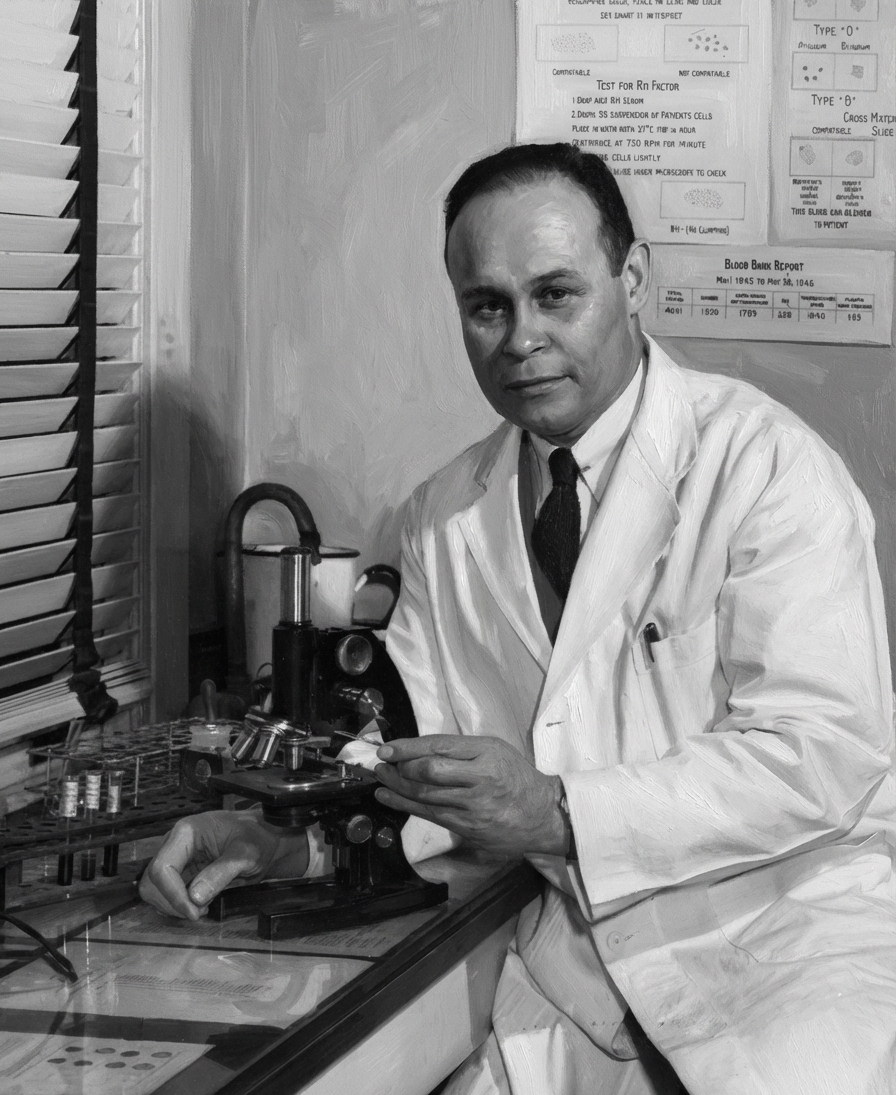
Dr Charles Richard Drew
Charles Richard Drew was born on June 3, 1904, in Washington, D.C. His father was a carpet layer, and his mother was a teacher. He was one of five children. His family lived in Foggy Bottom. The name of this area came from the Potomac River. It was a working-class neighborhood near the white house. Charles loved to swim in the Potomac River with his father. Blacks were not allowed to swim in the public swimming pools. He was 8 years old at the time. After elementary school, he attended the Paul Lawrence Dunbar high school, which was one of the finest high schools for Blacks in the country.
Charles was influenced by the pastor of his church who always encouraged his congregation to help the com munity after being educated. Charles was a great athlete. He excelled in football, basketball, track, baseball, and swimming. He was the star athlete at Dunbar. During the 1925 championship football game he returned a kickoff for a touchdown and launched a 35-yard touchdown with time running out to win the biggest game of the year. The dean of the college noticed his aca demic ability and warned Charles with these words: “Concentrate on your studies, Negro athletes are a dime a dozen.”
Life changed for him when his sister Elsie died of tuberculosis. He thought of becoming a doctor. He developed an interest in blood. He read everything he could on blood, its composition, experiments, and the use of transfu sions. He worked closely with an anat omy instructor named Dr. John Beattie. He conducted numerous experiments in the lab on blood. He worked for a Doctor of Science degree. His future wife Minnie Lenore Robbins was studying at Spelman College. Charles continued to work performing surgery and researching blood. He wrote his doctoral thesis and called it, “Banked Blood: A Study in Blood Preservation.” The 245-page document traced the his tory of blood and told how to preserve blood changes.
It also described his original experiments and how he organized an efficient blood-bank program. In June 1940, he received his Doctor of Science in surgery from Columbia University. After the Germans bombarded Great Britain night and day during World War II. He received a cable from his old friend John Beattie, now a director of England’s Royal College of Surgeons. He asked Charles to come to England with five thousand ampules of dried plasma for transfusion work immediately. Rinna Wolfe in the book called Charles Drew, M.D. described the following, “Drew brought blood donors together at one location, recruiting them through radio announcements, billboards, newspapers, and subway posters.
During the first five months of the program, 14,566 people showed up to give blood. After, Drew’s small, well trained staff tested and sterilized the blood at Columbia’s Presbyterian Hos pital, it was sent to England.” It was called the “Blood for Britain Drive.” In February 1941, the United States Armed Forces asked the Red Cross to organize American blood banks. Dr. Drew was appointed assistant director of this national program. Using mobile units, he directed the openings of blood col lection centers nationwide.
When Japan bombed Pearl Harbor, the United States had an ample supply of plasma on hand. However, Dr. Drew fought the U.S. War Department’s policy of blood segregation, which the American Red Cross accepted. The Army ordered the collection of Caucasian blood only. Black soldiers could only give blood for each other. Dr. Drew asked that this policy be canceled. He felt that this was an insult to his people. He called a press conference and issued this statement: “The blood of individual human beings may differ by grouping, but there is absolutely no scientific basis for any difference according to race.” Dr. Drew also argued against the discrimination of the chapter of the American Medical Association (AMA) in Washington. It did not accept black doctors. He noted that there was 100 years of bigotry in the American Medical Association.
It was ironic that after a serious car accident outside of Burlington, North Carolina, Dr. Drew’s car flipped over three times. He had a crushed chest and a leg cut to the bone. He was rushed to Alabama General Hospital near the accident. There, three white doctors tried to save him. A myth rose immediately that he was ini tially denied treatment. However, this was not true and can be verified by research. He was forty-five years old. Thousands mourned his death. He left his widow and four children behind.
Dr. Drew’s achievements in blood plasma and helping to establish blood banks for the Red Cross has benefited all Americans. Today, schools, hos pitals, and libraries bear his name, including the Dr. Charles R. Drew school here in Buffalo, New York. Thir ty-nine years after his death, 1200 citi zens honored him with a black-tie din ner in the Nation’s capital. On October 12, 1989, Howard University presented the first Charles Richard Drew World Medicine Prizes to two black doctors. A U.S. Postal stamp was also issued in his honor.