
Activist and Scholar Rob Redding Releases Bold New Book Advocating for Black Power and AI Justice, Featuring Redding-Shim Kwet Yung
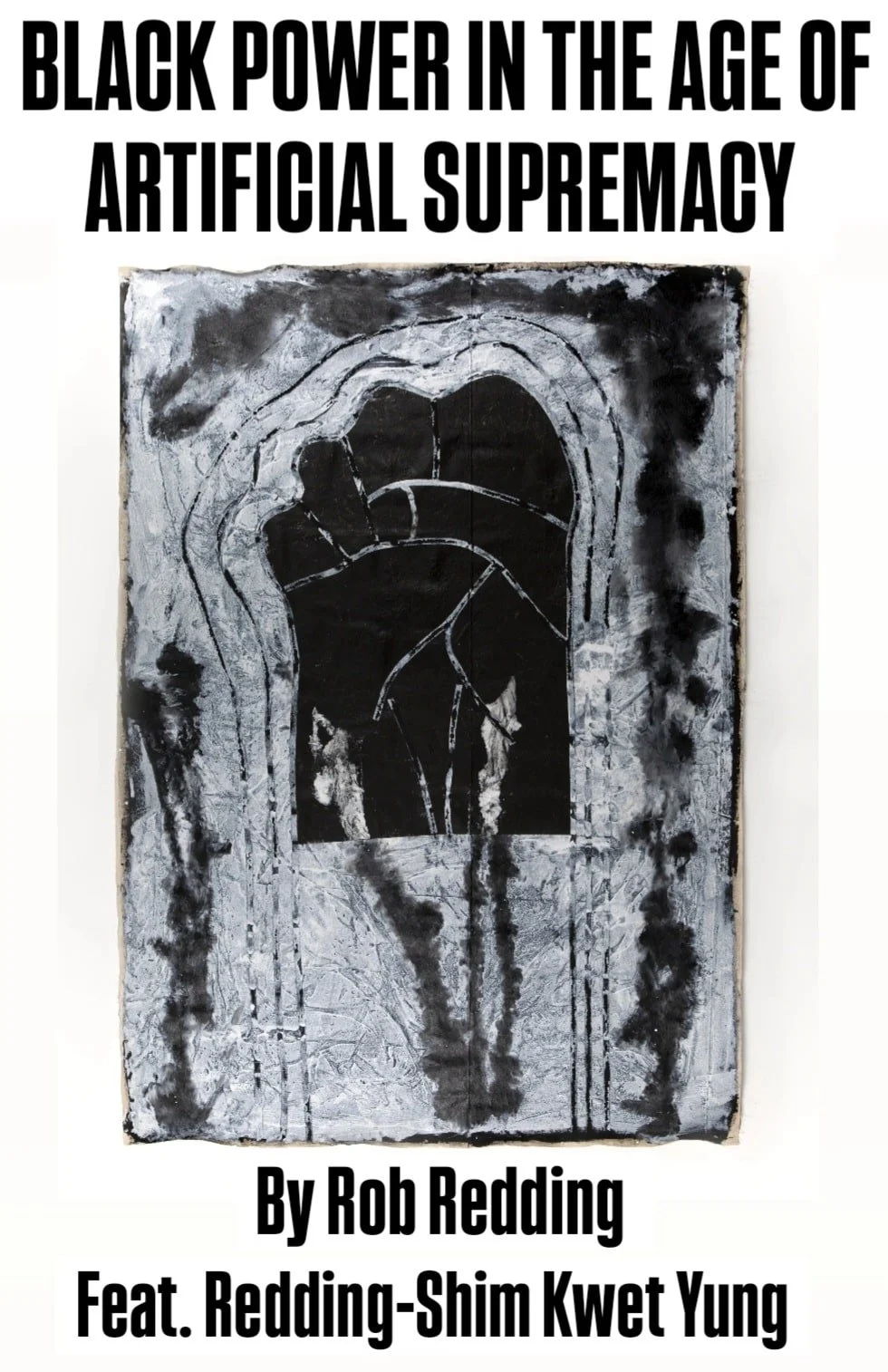
New York, NY — Renowned activist, media personality, and scholar Rob Redding today announced the release of his paradigm-shifting new book, Black Power in the Age of Artificial Supremacy.
This triumphant treatise is a provocative manifesto which confronts the urgent intersection of artificial intelligence, systemic racism, and Black liberation, calling for a revolutionary reimagining of technology’s role in society.
In Black Power in the Age of Artificial Supremacy, Redding challenges readers to see AI not merely as a tool for progress but as a battleground for racial justice. Through historical analysis, cultural critique, and militant activism, the book explores how AI can be harnessed to dismantle racial hierarchies rooted in centuries of systemic violence.
“This book is a call to arms,” says Redding. “We must reclaim control over the narrative and the technology that shapes our future. AI can either serve the oppressor or be used as a weapon of liberation.”
Supporting this powerful message, Redding’s husband Redding-Shim Kwet Yung, who features prominently in the book, adds:
“In our chapter, we explore how the language used to demean robots—like ‘clanker’—mirrors the racist slurs that dehumanize Black people. This chapter is about how we rehearse and normalize systemic racism through substitution, phonetics, and cultural history. Recognizing this connection is vital to resisting the ways racial bias is embedded in both our speech and our systems.”
Black Power in the Age of Artificial Supremacy introduces innovative concepts such as “Robootology” and “Robootism,” framing AI as an agent for Black empowerment. The book critically examines racial biases embedded in AI development and advocates for Black self-determination in the digital age.
The work also engages with seminal texts including Nick Bostrom’s Superintelligence, Stuart Russell’s Human Compatible, Safiya Noble’s Algorithms of Oppression, Ruha Benjamin’s Race After Technology, and Frantz Fanon’s Black Skin, White Masks, situating its revolutionary ideas within a broader scholarly debate.
“This is more than a book,” Redding emphasizes. “It’s a blueprint for Black liberation in the digital age. We are fighting for our future, and AI is the battlefield.”
Black Power in the Age of Artificial Supremacy is available Monday Jan. 5th on Amazon.com.