
UB, Roswell Park develop AI tool to assess lung cancer surgery complication risk
by Cory Nealon
New tech aims to deliver personalized risk estimates and clinician-adjustable insights to support surgical decisions
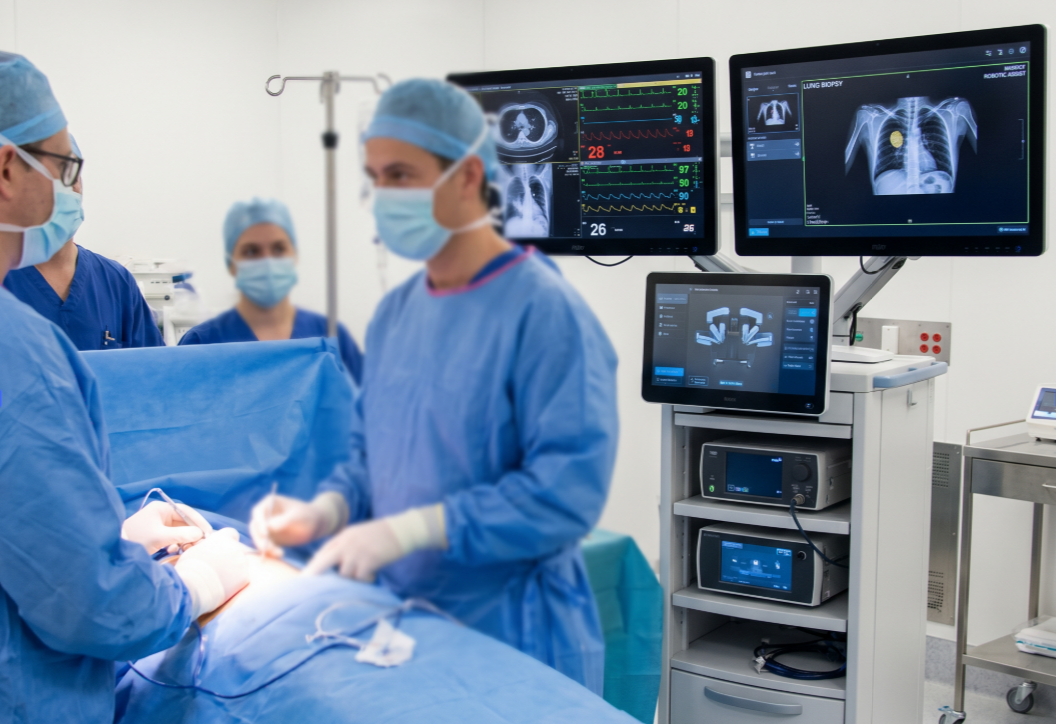
Researchers from the University at Buffalo and Roswell Park Comprehensive Cancer Center are developing an artificial intelligence tool to help surgeons better identify lung cancer patients at risk for post operative complications. The work builds on a longstanding collaboration between the institutions, bringing together UB’s strengths in AI and Roswell Park’s expertise in thoracic oncology.
The system, called MIRACLE (Multimodal Integrated Radiomics and Clinical Language based Explanation), is believed to be the first to combine clinical data, CT imaging and large lan guage model (LLM)-gen erated explanations to provide personalized risk estimates for patients who may be candidates for lung cancer surgery. It also produces a summary that surgeons can review and refine to reflect their own clinical insight.
“For more than five decades, UB has been a leader in artificial intelligence for public good,” said Venu Govindaraju, PhD, senior vice president for research, innovation and economic development, and co-author of the study whose leadership in AI laid the foundation for this break through. “Today, this expertise is transforming cancer research, using AI to detect disease earlier and opening new path ways to prevention and cure.”
Lung cancer is the leading cause of cancer related death worldwide, and surgery remains one of the most effec tive treatment options. Because many patients are medically complex, postoperative complications can affect up to 40% of cases, making accurate risk assessment critical. However, existing risk calculators often rely on population-level data and subjective clinician judgment, which can limit their effectiveness for individual patients.
According to Kenneth Patrick Seastedt, MD, a thoracic surgeon at Roswell Park and study co-author, this can lead to difficult decisions as some patients who could have safely undergone surgery are not recommended for it, while others at higher risk proceed without sufficient preoperative and postoperative planning.