
America at 250, can we celebrate together?
by Norman Franklin
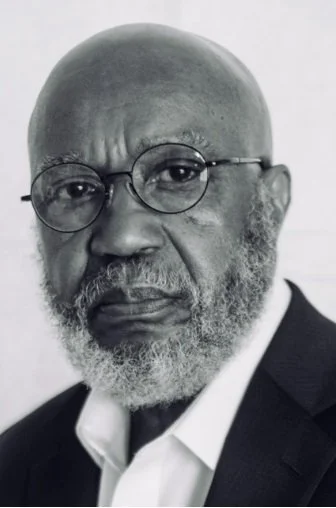
Norman Franklin
The preparations for this semi quincentennial celebration have by design elevated patriotism, exceptionalism, and national piety, as the founding standards of this country. It is a nation founded on Christian principles. It’s our story and we are sticking to it.
In my lifetime, I have witnessed a less sanitized version. I came of age in the 1960s. It was a decade of change. A time of protest. A time when the mythicized image of America was shattered by the realities of Jim Crow injustice. The evening news broadcast pulled back the curtain that allowed for the comfort of not knowing. It exposed the moral shame lurking in the shadows, peering over the shoulders of an America couched in superficial Christian principles.
Our struggle became real when network news disrupted the comfort of family time. After dinner, the evening news—the news served a distasteful entrée: the struggle for the right to vote, bloody protesters, and women, children and elderly Black men washed down the streets with high-pressured firehoses.
The statement by Frederick Douglass yet breathes: “Power concedes nothing without a demand. It never did and it never will.” The social gains, the economic gains, and the political gains that resulted over the decades since gave us the hope of belonging. We are all Americans. This is, or can be, “One nation under God.” It is a statement of national identity. We pledge it to our flag.
Legislation made segregation illegal. A Civil Rights Act and a Voting Rights Act became law. Federal policies and corporate programs were implemented to correct circumstances resulting from past systemic injustices. Minority representation in the political processes increased. The election of African Americans and women brought an era of transformation through representation. America was evolving into the America of its creed. Not perfect but evolving. But the undertow of resistance never subsided.
The playbook was placed in the side drawer but frequently pulled out to employ defensive tactics and offensive maneuvers appropriate for the era. There were legal challenges to Affirmative Action policies of hiring and admission to universities. The legal briefs moved into the lower courts to the Supreme Court. The landmark decisions changed the landscape of social advocacy.
The narrative has dramatically changed over the decades of the twenty-first century. Affirma tive Action programs are reverse discrimination. A recent Supreme Court ruling resumed disem powering The Voting Rights Act. In an earlier ruling, Brnovich v. Democratic National Committee, the Court created guideposts that placed the burden of proof on plain tiffs—Section 2. With Shelby County v. Holder, the coverage formula in Section 4(b) was struck down. That formula was the undergirding strength of Section 5. Without the formula, the preclearance requirement became unenforceable. The Voting Rights Act remains as law but shackled.
States with a history of voter suppression are no longer required to submit redistricting plans for federal review. Nearly every infamous Southern state has rushed to gerrymander voting districts along partisan lines. The endgame—dilute minority voting strength. It’s not driven by racial identity, it’s party identity. Nonetheless, the African American political voice is quieted.
The African American desires to celebrate America 250. We have poured our souls into the growth of this Nation. We have shed our blood on the battlefields of foreign lands for the exceptionalism of America. We have carried the banner of God and country. We want to celebrate it.
We feel betrayed by the erasure campaign underway. It presents America without stain. It presents America without an accurate narrative of history. It sets aside the contributions of African Ameri cans, Indigenous Americans, Latinx Americans and immigrants as situational, inconvenient, and expendable.
We will celebrate America 250 with fireworks, picnics, and cookouts. We will celebrate with the tension Frederick Douglass stated in 1852 still breathing on our necks. Douglass’ sentiment paraphrased what does this celebration mean to the African American if our exceptionalism is discredited, our contributions erased, and our history narrative scaled down to the margins of the American story. That is not the story we will celebrate. There are improbable truths that must surface. Truth that must be a part of the celebration of exceptionalism.
The undertow beneath the celebration is the collection of improbable truths written with indelible ink. Democracy expanded because those excluded demanded inclu sion. The Christianity of this nation often spoke with two voices, one for domination and one for liberation. That distinction remains unresolved.
Let me conclude with a thought provoking question posed by Gay Pasley, writing in The Black Wall Street: “When the people this country has questioned, displaced, enslaved, deported, and doubted keep becoming undeniable, will America finally learn to recognize the people who have been helping to build it all along?”