
Is It Really About the Immigrants?
By Norman Franklin
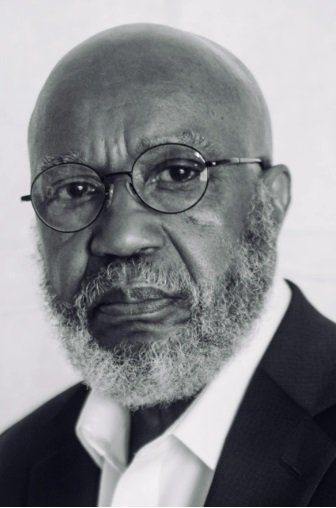
Norman Franklin
America’s psychosis: immigrants are taking over our country. Yet we are a nation whose economic spine has been the strength of immigrant labor. This is empirical, not just his torical. It’s what built American greatness. We now purport that immigrants hinder the quest to reclaim that greatness.
‘I’ll fight to rid America of all its immigrants,’ functions as a rhetorical reframe of this midterm election cycle. When this rhetoric is the language of campaign promises, it becomes governing policy if it leads to victory. Fear of replacement is fanning the flames of hatred. When hate becomes the lens, our cognitive senses are compromised. It dulls our hearing, blinds us to reason, and disrupts our ability to accurately process data. Critical thinking surrenders to emotive reasoning. Emotions are not facts, but they are data. If processed with intelligence, the data primes positive response; if manipulated, the misuse of the data leads to regrettable consequences.
History offers precedents. The fear of replacement signals that the loss of control is a sticking point. After centuries of unquestioned white privilege embedded in law, labor, and citizenship, the thought of not preserving that position is unsettling. It fuels a collective paranoiac outrage against immigrants. It happened during the Great Depression.
The Mexican Repatriation was driven by the belief that Hispanic immigrants were tak ing jobs from American citi zens. White American jobs. The 1930s were Jim Crow America. There was nil concern for the welfare of Black Americans. It is estimated that two million Mexicans — documented and undocumented— were deported.
These were extreme mea sures in extreme times—fear, not reason, drove them then as it does now. Today’s backlash is manufactured through fear, loss of power, and hatred. It is sustained by campaign rhetoric that promises what cannot be delivered. The numbers tell the story.
A Pew Research Center estimate places the number of unauthorized immigrants in the U.S. at 14 million. In 2025, the administration floated an aspirational number of 1 million deportations annually. Historically deportations have hovered around 330,000 annually. At an aggressive rate of 600,000 annually, it would take 28 years to rid America of all undocumented immigrants. The social and economic contractions would be devastating.
A sustained, scaled-up removal over decades would disrupt labor markets, tax bases, and economic activities in communities nationwide. Undocumented immigrants paid nearly $97 billion in federal, state, and local taxes. Legal and undocumented immigrants generate $1.6 trillion in economic activity, according to the American Immigration Council. A Center for American Progress reports that removing 7 million unauthorized work ers would shrink GDP with an immediate impact of 1.4% and 2.6% over an extended period. Over a decade, the aggregate losses could exceed $4.7 trillion.
The data suggests that mass deportation would be anathema to America’s economic well-being, destabilizing labor markets while reinforcing a society divided between the wealthy and the othered. The undertow of social reordering is the expansion of Artificial Intel ligence (AI). The economy is in transition. Historically, when transitions happen, the ruling systems don’t protect workers but manage them. AI is not just replacing jobs. It is restructur ing the value of human labor. Economic efficiency is not the goal; the devastation alone refutes that claim. What emerges instead are uncomfortable indicators of social reordering and political conditioning.
Immigrants have histori cally proven useful in political conditioning. They are highly visible, devalued, demonized, and expendable. These racially/ ethnically “othered” are easily linked to economic anxiety, and they lack voting privilege and political protection. The labels as illegals, criminals or invaders diminishes empathy for their plight.
The thrust against immigrants energizes the base and mobilizes voters. It justifies excessive use of power, disrupts cohesion of marginalized communities, and tightens labor control. Political misdirection keeps the public blaming the immigrants while power is consolidated in the hands of the wealthy elite.
While the public focuses on immigrants, voting rights are gutted, districts are gerrymandered, courts are stacked, and corporate powers are deregulated. Religion and politics are merged and public education— the Department of Education— is dismantled. This is coordination by consequence. By design, power ends up in the hands of the few.
Systemic changes are under way. Will the destabilized economy brought on by mass deportations rebound? What is the endgame of the industry transitions engineered by automation? What will be the identity of government once the fusion of religion and politics is cemented?
There are glimpses of a new form of government, a new social order, a greater domi nance of religion in politics— authoritarian governance and a dismantled democracy.