
The Spirit of Society
By Christopher A. Etienne
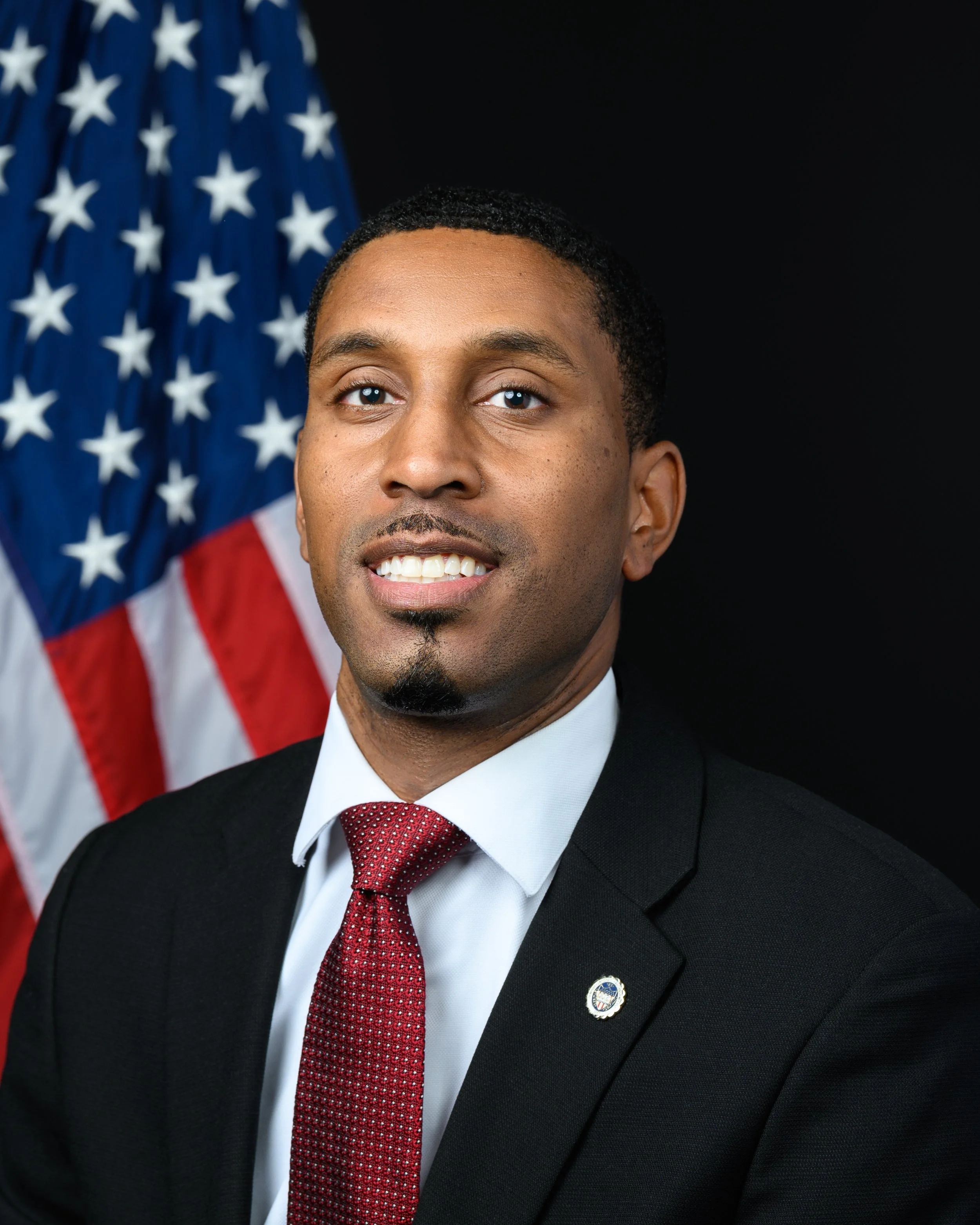
Christopher A. Etienne
The letter of the law should not outdistance the spirit of the law. The letter of the law rests in systems, but the spirit of the law rests in the hearts of the people. The late Judge Learned Hand, who served as a federal district and appellate judge for more than fifty years, delivered a speech in 1944 entitled, The Spirit of Liberty, famously argued, “I often wonder whether we do not rest our hopes too much upon constitutions, upon laws and courts. These are false hopes; believe me, these are false hopes. Liberty lies in the hearts of men and women; when it dies there, no constitution, no law, no court, can even do much to help it. While it lies there it needs no constitution, no law, no court to save it.” How true that is.
Indeed, it appears to me, at this moment, that some professional politicians’ hearts are hardened toward the common democratic American principles of personal rights, economic rights, and political rights, to name a few. In our society, there are strong winds of propaganda and preconceived notions about people and places blowing and howling in the land of democracy to shift the thinking of the people toward hopelessness. There are storm clouds of slander in our politics, coming from what former U.S. President John Quincy Adams termed “patriot[s] by profession,” by pretending “extraordinary solicitude for the people, by flattering their prejudices, by ministering to their passions, and by humoring their transient and changeable opinions.” To be clear. Our country does not need patriots by profession. Contrary to the false and foolish notions of pessimistic opinions, our country deserves patriots by morals, patriots by values, patriots by courage, and patriots by service. To paraphrase James Russell Lowell in The Present Crisis in 1845, we enslave our children’s children when we capitulate with mean-spiritedness.
The late Dr. Ralph J. Bunche, a U.S. diplomat and Nobel Peace Prize laureate, eloquently stated the importance of the cause for peace around the world in his 1950 speech entitled, Human Relations and World Peace. Dr. Bunche argued, “Man has made spectacular progress in science, in transportation and communication, in the arts, indeed, in all things material. It is a matter of colossal and tragic irony that man, in all of his genius, having learned to harness nature, to control the relations among the elements and to direct them as he sees fit – to split the atom – even to the point where he now has the means readily at hand for his own complete self- destruction – yet man has never learned how to live with himself; has not mastered the art of human relations. In the realm of human understanding the peoples of the world, including ourselves, remain shockingly illiterate. This has always been and today remains man’s greatest challenge; how to teach the peoples of the world the elemental lesson of the essential kinship of mankind and man’s [common interest].” Indeed, the national, state, and local levels of government have their different opinions about the purpose and best direction of our country, but the record of history is clear, we must learn to peacefully coexist when it is popular and unpopular, in season and out of season, to move our country forward. The United States is still an inspiration to countless multitudes who share our hope and faith in the principles of democracy. The endorsement of enlightened internationalism is the foundation for building global unity.
There is a certain antagonistic attitude – by the cynics, critics, and capitulators – toward those who lead with empathy, critical thinking, and diplomacy to achieve goals. This tendency to accentuate a pessimistic view of the world, rather than an optimistic view of the world. It appears to me that the antagonistic attitudes are pontificating that they love the status quo and will fight for it. I believe this is an attitude that lacks faith in our country’s capacity to grow and has endorsed policies created to protect what our country has rather than add to our abundance. This attitude shall not be the standard. This mentality of being a parrot of another person’s thinking shall not be the standard. Have the courage to think for yourself. Indeed, no citizen is greater than another citizen. No one group of citizens is greater than another group of citizens. No one state or municipality is greater than our country’s union. The privileges and rights of all American citizens are endowed by God and writ large in our Constitution. “We the People of the United States, in Order to form a more perfect Union.” I do not need to elaborate. As a result, the Constitutional principles are the pillars of our democratic society.
To be clear. I am under no illusions about patriots by profession, and I do not underestimate their capacity to do evil. However, I am confident that evil has an end date, with the historical hourglass that no mortal hand can turn around, and good is everlasting. How is good everlasting?! Because God is good. Heaven is His throne, and the earth is His footstool. As a result, watch the throne, not a troll. Indeed, “We do not give up. We do not quit. We do not allow fear or division to break our spirit.”
The Founder Alexander Hamilton made an interesting point in his argument of the natural rights of mankind, found in his second essay entitled, The Farmer Refuted in 1775, declaring, “The sacred rights of mankind are not to be rummaged for among old parchments or musty records. They are written, as with a sunbeam, in the whole volume of human nature by the hand of the divinity itself and can never be erased or obscured by mortal power.” For that reason, I have great faith that, We the People, from all corners of our country – rural, urban, and suburban – shall work together so that America can again begin its forward march using the power of reason, not the hot temper of emotion, to inspire service in the public interest.
Christopher A. Etienne Biographical Sketch
Christopher A. Etienne’s public service ethos is inspired and instructed by his parents and heritage in New Orleans, LA. His upbringing, formal education, and professional experiences provided him with a worldview that ordinary people can do extraordinary things when they are provided an equal and equitable opportunity. Previously, he served as a Legislative Aide to U.S. Representative Cedric L. Richmond and U.S. Senator Mary L. Landrieu, both of Louisiana, and U.S. Representative Jahana Hayes of Connecticut. He earned his master's degree in political science from Howard University in Washington, D.C. and earned his bachelor's degree in political science from the University of Arkansas at Pine Bluff (UAPB), two prestigious historically Black universities (HBCUs). For his leadership in public service, he was named a Distinguished Fellow of the Nancy M. Marsiglia Institute of Justice at Loyola University New Orleans College of Law and United Way Southeast Louisiana, a Fellow of the Institute of Politics at Loyola University New Orleans (IOP), and the New Orleans Regional Leadership Institute (NORLI).