
The Nation Above Us, How Local Politics Builds Federal Power
by Norman Franklin
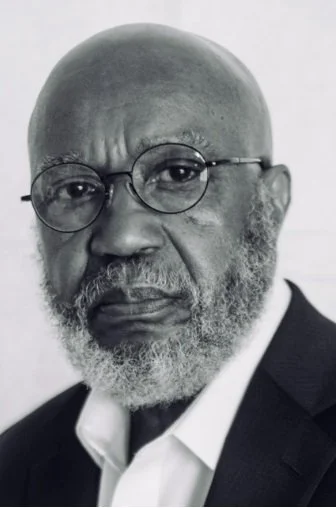
Norman Franklin
We are a nation governed by the people, and for the people. That spine of our democracy becomes fractured by the noise of national politics. Reactions to the tone and implication of national legislation vary. The tone and direction of the nation seems distorted. But the system is working as it was designed. It is government by the will of the people.
National legislation mirrors local politics. It is seldom the reverse. Federal institutions do not cultivate ideologies, they aggregate them. Congress reflects district identities. Presidents reflect electoral coalitions. The Supreme Court responds to long-building legal and cultural conflicts. The results sometimes shock us. But there are deep local roots that have shaped decisions.
The moral geography of the nation produces different versions of America. What shocks the nation is usually the ideologies of local districts normalized over decades.
To see this dynamic clearly, three defining arenas—immigration policy, state control of education, and voting access—reveal how the nation determines who belongs, what is taught, and who holds power, long before those decisions are formalized at the federal level.
Immigration policies are prioritized by states bordering entry points. The flow of illegal immigrants into the local economies created stress on their resources. Rhetoric replaced fact. Fear, resentment, and panic became the narrative. Fear of immigrants became the platform of national politics.
Campaign rhetoric devalued their humanity, framed their hopes as criminal motivations, and weaponized their residence as threats to our ecosystem. Mass deportation policies are the result. The ideology of fear was cemented in local politics. Emotions supplanted facts—critical thinking skills diminished over time.
The autonomy of state and local school systems has been the fulcrum of the nation’s education framework. Pre–Brown v. Board of Education independent school systems practiced race-based restrictions on access to public schools. The federal intervention removed the autonomy to discriminate. State departments of education and local school boards resented the loss of control over their school systems. That resentment became policy that shaped state legislation and then the national agenda.
The Trump administration aggressively maneuvers to dismantle the Department of Education. The pretense—the federal government should not set requirements for K-12 curriculum. The facts—DOE funds are tied to specific federal priorities. Regulating curriculum is not included.
Federal funds target equity gaps such as poverty, disability, and language access, and other specifics related to fairness. The funds typically comprise 10 percent of state departments of education budgets.
The 1954 Supreme Court ruling mandated that public school systems desegregate. The federal government intervened to correct the pretense of “separate but equal” schools. Local school boards resisted, then acquiesced—performative integration.
Local authorities passively accepted the desegregation mandate, but power never relinquishes the fight to regain control. Local school boards frame the sentiments of the community into policy. State legislators and congressional representatives advance the voice of their districts. The resistance policies congeal in the halls of Congress—dismantle the Department of Education. The lack of interest in local elections is implicit—the influence of local politics is undervalued.
The power of the ballot.
The right to vote is a constitutional guarantee. It was not an inalienable right. Women organized protests to secure their voice. The African Americans endured beatings during peaceful demonstrations, their blood was shed, and deaths occurred, to win their rights and access to the polls. The struggle was against the regional social construct of racial equality—in the Southern sector of America, Jim Crow law imposed poll taxes that impeded access for Blacks. The Voting Rights Act of 1965 lifted the heavy hand of the apartheid South. Traditions embedded in ideologies of race superiority do not die—they adapt.
The disputed 2020 election results cast a floodlight on the growing distrust of the voting process. The 2016 election hinted at fraudulent voting. With the failed re-election bid, the President alleged the election was stolen. The system was broken. It needed reforms to restore integrity to the voting process. But that sentiment had set in local politics since the 1965 Voting Rights Act became law.
Presidents respond to electoral coalitions. The Supreme Court responds to long-building legal and cultural conflicts. The recent gutting of the 1965 voting Rights Act should not have shocked us—it was inevitable. The 2013 Shelby County v. Holder ruling began the dismantling. It struck down the formula that determined which states needed federal approval. This removed federal oversight.
This recent Supreme Court ruling effectively demolished the Voting Rights Act. The provision to allow challenges to discriminatory maps was weakened. This directly affects redistricting and minority representation. Louisiana was forced to postpone elections. Challenges now require proof of intentional discrimination.
Legal and cultural conflicts influence local election. Local elections shape state congressional district politics. U.S. congressional candidates pledge to make the voice of their district heard. In Washington the President—responding to the will of his coalition—and Congress, governing within the mandates of their districts, elevate and confirm Supreme Court justices whose interpretations reflect those same political currents.
What emerges is not an isolated federal authority, but a system shaped at every level—of the people, by the people, and for the people. A nation above, built from politics below.