
The Wound Was Not Our Fault. The Healing Is Our Work.
What science now confirms about what was done to us — and what we can do about it, starting right now
by America Morris
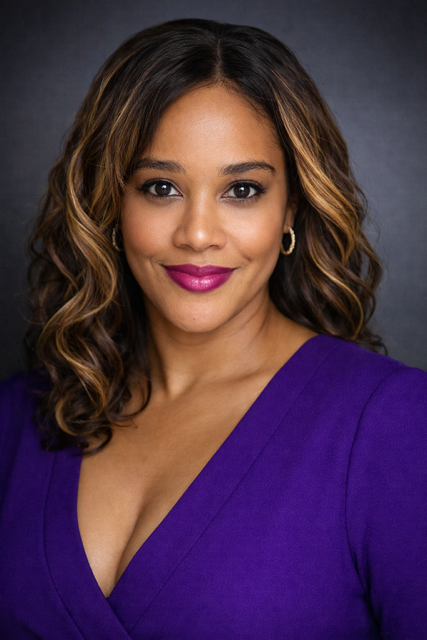
America Morris
There is something that science has now confirmed that Black communities have known in their bodies for a very long time.
The conditions we were handed — the poverty, the disinvestment, the violence that came from being systematically excluded from the resources and protections that other communities received as standard — did not just produce difficult circumstances. They produced biological changes. Changes that traveled forward. Changes that arrived in the bodies of our children and grandchildren before those children had a single personal experience to explain the fear, the vigilance, the sense that the world is not quite safe and never quite settles.
The science has a name for this: epigenetics. The study of how lived experiences change how our genes are expressed — and how those changes transmit across generations. Research on descendants of enslaved people, of families who survived the Great Migration, of communities shaped by redlining and disinvestment and the specific violence of structural racism has documented what our grandmothers already knew: what they lived, we carry. Not as memory. As biology.
This is not a reason to despair. This is a reason to understand. Because what was installed through conditions can, with the right tools and the right daily practice, be uninstalled the same way. The same mechanism that passed the wound forward can carry the healing forward. And that changes everything about what is possible right now, in this generation, for the people of this city.
What Was Done — Named Honestly
Systemic racism is not a slogan. It is a documented architecture. It is redlining — the federal policy that explicitly denied Black families access to home loans and the wealth-building that homeownership produces, concentrating poverty in specific ZIP codes that are still living with those consequences today. It is the deliberate underfunding of schools in those ZIP codes, ensuring that the children most in need of excellent education received the least of it. It is mass incarceration at rates that have removed fathers, brothers, and community anchors from Black neighborhoods at a scale that has no parallel in American history. It is the specific, accumulated, multigenerational effect of a society that built its prosperity on the labor and exclusion of Black people and then told those same people that whatever they had not yet built was a personal failure.
These systems did not just produce material deprivation. They produced a specific psychological and biological effect: a nervous system calibrated to threat. A body that learned, across generations, that the world is a place of scarcity and danger and unpredictability — and that learned it so thoroughly that the learning became biology, became the baseline, became what gets passed to the next child before that child has done a single thing to deserve it.
That is the wound. Named without apology. It was done to us. It was not done by us. And it has been running, largely unaddressed at the root level, for generations.
What Is Now Possible — The Science of the Solution
Here is what else the science has confirmed: the brain is not fixed. The nervous system is not permanent. The pathways that were built through the repetition of threat and scarcity and survival can be rebuilt — through the repetition of safety, of identity, of the daily practice that teaches the nervous system a different truth.
This is called neuroplasticity. The brain's ability to physically change its pathways based on what it repeatedly experiences and practices. Neurons that fire together wire together — and neurons that stop firing together unwire. The fear pathway weakens through disuse. The aligned pathway strengthens through use. This is not metaphor. This is documented, peer-reviewed, reproducible neuroscience.
The specific mechanism: the reticular activating system — the brain's filter — processes billions of bits of information per second and selects approximately two thousand to pass to conscious awareness. The selection criterion is whatever the brain has been told is important, familiar, or threatening. If the brain has been running a survival program, the filter finds evidence of threat everywhere. If the brain is given a deliberate daily practice that resets the filter — a declaration of identity spoken out loud before anything else enters the day — the filter begins finding evidence of alignment, capacity, and possibility instead. Same world. Completely different experience of it.
And the epigenetics goes both directions. The same research that documents the transmission of wound also documents the transmission of healing. What a parent rewires in their nervous system today changes the biological inheritance their children receive. The generational transmission does not only carry forward the harm. It can carry forward the healing with equal force — if the person in the present generation does the work.
You are not just healing for yourself. You are healing for the person behind you who has not found the tools yet. You are changing what your children receive. That is not pressure. That is the most powerful thing a person can do with the time they have been given.
Liberation — What It Actually Means
The word that names what this work produces is liberation. Not the casual version of the word. The full version — the one that Howard Thurman was writing about in 1949 when he described the inner life of people with their backs against the wall. The one that the liberation theology tradition has been building toward for seventy years. The one that means something specific and complete.
Liberation is freedom from the installed story — the survival program that was written by conditions of oppression and that runs in the nervous system as if it is the truth about who you are. The moment a person understands that the limitation was installed externally, the relationship to that limitation changes entirely. You are not fighting a character flaw. You are uninstalling a program. That shift is the beginning of liberation.
Liberation is freedom to build — to want without apology, to occupy the full space the source designed for that specific person, to make decisions from calling rather than from crisis, to imagine a life beyond the management of conditions and then begin building it. The I AM work, the identity reclamation, the sovereignty — this is the freedom-to dimension of liberation. It is not enough to stop running the fear. You have to have something true to run instead.
Liberation is collective — Ubuntu, the African philosophical principle that a person is a person through other people. Your individual freedom is incomplete as long as the people around you are still running the installed story. This is what separates the liberation framework from self-help: self-help says you can be free. Liberation says you are not fully free until the community is moving toward freedom together. Every act of healing points toward the person behind you — the one you bring with you as you go further.
And liberation is generational — the interruption of the transmission. The free person changes what the next generation inherits. The wound stops traveling forward not because the conditions disappeared but because a person in the current generation did the work to stop carrying it and start carrying something else. That is the deepest dimension of liberation available. And it is available right now. Not after the conditions change. From inside the conditions.
What Buffalo Right Now Requires
Buffalo has one of the highest childhood poverty rates in America. The East Side ZIP codes carry disproportionate concentrations of the wound that structural racism and multigenerational disinvestment produce across generations. The children in those ZIP codes are not just inheriting material conditions. They are inheriting a nervous system already calibrated to a threat level their parents survived — and they are inheriting it at an age when the nervous system is most porous and the identity is most forming.
What this moment requires is not a program. Not an event. Not a single intervention delivered to a community from the outside. What this moment requires is the community deciding — each person in it, individually and together — to do the healing work and then transmit the result. To give the children watching something different to inherit than what was given to us.
That means parents doing their own daily practice before the phone and the news and the day get their hands on the morning. It means teachers bringing the nervous system science into classrooms not as a psychology lesson but as a daily tool. It means every person who finds language for what they have been carrying reaching back for the one person behind them who is still searching. Not ten people. One. That is Ubuntu. That is how the healing has always moved — through relationship, through community, through one person refusing to go further without bringing someone with them.
The systems that produced the wound are still present. They have not finished. The conditions have not resolved themselves. And waiting for them to resolve before beginning to heal is a strategy that has already cost this community too much.
The wound was not our fault. The tools to heal it are now available. The only question is whether this generation will use them — and what the children watching us decide will pass to the one after that.
Amercia Morris is an author, educator, project manager, social justice and community advocate, business owner, and someone trained in the social sciences who still calls Buffalo's East Side — ZIP code 14208 — home. She is the founder of Luxorae and the WNY Community Impact Collective, and the author of multiple books including Unchained Mind