
The Dead Can't Speak. Our Death Investigation System Won't Either.
by Terence Keel
University of California
Author of The Coroner’s Silence: Death Records and the Hidden Victims of Police Violence (Beacon Press, 2025)
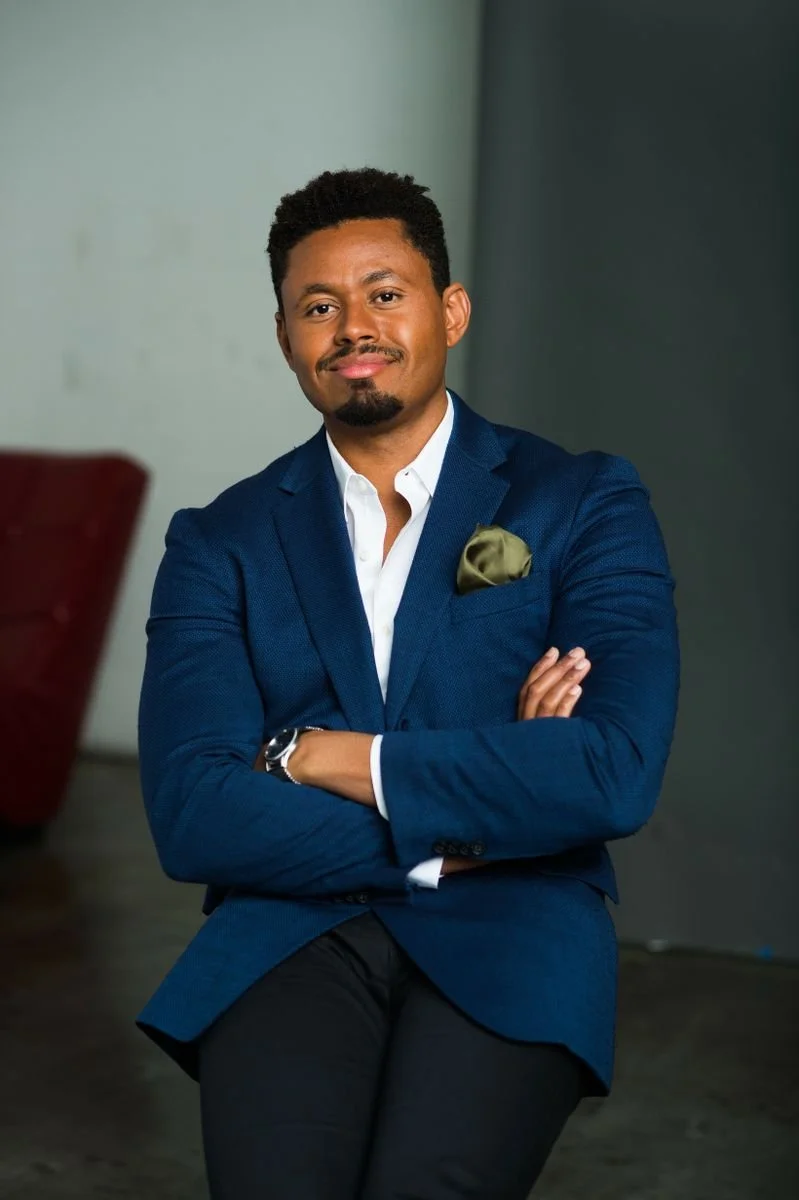
Terence Keel
Every year, more Americans die in police custody than in Canada, Germany, Australia, New Zealand, and the United Kingdom combined. Let that settle for a moment. Not in a war zone. Not in a natural disaster. In the custody of their own government — in jails, in the back of patrol cars, in holding cells just blocks from their families. And yet, most of us have never heard of the vast majority of these deaths. That invisibility is not accidental. It is engineered.
I am a professor at UCLA and for the last 15 years I’ve taught countless young minds about the history of scientific racism and how medical discrimination impacts Black and other politically vulnerable communities. Despite this work, I had not realized that our death investigation system was corrupted by racial bias, police influence, and discrimination. George Floyd’s public murder was a turning point for me. His autopsy revealed how our institutions — our medical examiners, our coroners, our courts — obscure the truth. While the Hennepin County Medical Examiner classified Floyd’s death as a homicide, it made sure to note that his primary cause of death was “cardiopulmonary arrest complicating law enforcement subdual.” What does this actually mean? It meant that Floyd had a bad heart, which made it harder for police to arrest him and therefore police had to use more force. If not for the video footage of his death and the global protest that followed, Floyd’s death would have gone unnoticed and his death record would have remained one that obscured the truth.
After his death, I went looking for all the “George Floyd’s” that never gained media attention or justice. What I discovered was horrifying. Like many of us, I believed that when someone died under suspicious circumstances, the systems designed to investigate those deaths would follow the evidence wherever it led. I was wrong. And the cost of that comfortable ignorance has been paid in lives. I wrote The Coroner’s Silence to help us get up to speed about what really happens when people lose their lives to police violence.
Here is what our death investigation system actually does: it buries the truth alongside the body.
When someone dies in police custody, the law requires an investigation. A medical examiner or coroner examines the body and assigns a cause — homicide, natural causes, suicide, accident, or "undetermined." On the surface, this sounds like democratic accountability. In practice, it is often its opposite. Most of these investigators are not elected officials. They are appointed — appointed by the very same local governments that would face financial and legal consequences if their police departments were found responsible for a killing. The conflict of interest is not subtle. It is structural.
The results speak for themselves. Families who lose loved ones in custody are handed autopsy reports that describe, in vague and detached clinical language, how a preexisting heart condition or a history of substance abuse was the real cause of death. Reports that catalogue injuries — broken noses, abdominal hematomas, torn wrist tissue — and then refuse to explain how a person alone in a cell acquired them. Reports that treat the deceased as the author of their own death, while the officers who were the last people to touch that body disappear from the record entirely.
This is not incompetence. It is a choice.
The bodies of people who die in custody contain two things: biology and society. They carry the physical evidence of their final hours — bruises, hemorrhages, ligature marks. But they also carry a longer story. They carry the consequences of overpoliced neighborhoods and underfunded mental health systems. They carry the physiological weight of poverty, of fear, of being in the wrong place at the wrong moment in a country that has never adequately reckoned with who it decides to criminalize and why. A truly honest autopsy would have to reckon with all of that. It would have to name the officers in the room, the policies that put them there, and the failures that made the encounter lethal. Our system does almost none of this.
Instead, death investigators look at a body and see only nature. They see a heart that stopped, a lung that failed, a preexisting condition that tipped toward its inevitable conclusion. They do not see the society inside the body — the legal decisions, the economic neglect, the institutional indifference that shaped that person's final hours. To see society inside a body is a political act. And in a system designed to protect the state, political acts are unwelcome.
What would accountability actually look like? It would start with making death investigators genuinely independent — not appointed by the governments they are supposed to scrutinize. It would require mandatory, transparent public reporting on every in-custody death, with standardized data collection that can be audited by researchers, journalists, and the families most affected. It would demand that autopsies routinely document the actions of officers present, not just the biological condition of the deceased. And it would mean facing the uncomfortable truth that many of the people who die in custody were already victims — of our nation’s vanishing safety net, of poverty, of mental illness, of a society that responds to suffering with handcuffs rather than humane solutions.
The families who have lost someone to police violence already know this. Many of them have taught themselves medical terminology, legal procedure, and forensic science just to ask the questions their government refuses to raise on their behalf. They are doing the work our democratic institutions were built to do but often fail to deliver.
The rest of us need to catch up. Willful ignorance is not neutrality — it is a vote for the status quo. And in this case, the status quo is a death toll that should be making headlines every single day.
We cannot afford to wait for someone else to solve this. The silence of our coroners is also the silence of our consent. This silence must be filled with the truth.