
What Experience Actually Is (and Why I Stopped Waiting for It) - Creating my own access into STEM fields through hands-on field experience without waiting for a company/organization to provide it
by Christin Bratton
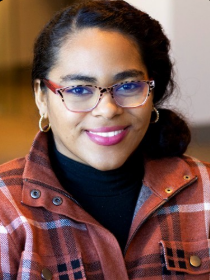
Christin Bratton
Experience in environmental science, conservation, ecology, wildlife, sustainability—or STEM more broadly—is not meant to be abstract. You learn it by doing the work: being outside, documenting conditions, analyzing impacts, writing reports, and making judgment calls with incomplete information. Everyone in the field understands this. Yet entry-level jobs still demand experience that many people are never given a real chance to obtain.
Yes, you can apply to nonprofits, internships, and volunteer programs. The limitations are still real. Internships often do not mirror the actual duties listed in future job descriptions because interns are treated as temporary help, not developing professionals. Substantive responsibility and skill growth are limited, and while that is understandable—organizations are still operating businesses—it does not solve the experience gap. Volunteering can be just as restrictive, especially when opportunities in your specific niche are scarce, location-dependent, or incompatible with your schedule.
This disconnect shaped many of my early career decisions.
Experience-seeking is still challenging today. Many opportunities remain unpaid, inaccessible, location-locked, or require long-term commitments that do not align with how people actually live. That has often been my reality. When you are nomadic for work, deployed, traveling, or balancing contract roles, you cannot always promise weekly volunteer hours or enroll in semester-long programs. That does not mean you are incapable. It means the system was not designed with flexible, modern careers in mind.
So I stopped waiting for permission.
I went after experience directly. I documented my own field observations. I built repeatable workflows for environmental review, site documentation, research notes, and reporting. I treated fieldwork like real work because when it is done correctly—structured, traceable, and defensible—it is real work. Over time, that documentation became resume-ready proof of competency, not hobbies. It earned its place on my resume because it reflected actual skills, not just interest.
That gap—between what jobs demand and what people are realistically allowed to access—is the core problem my platform exists to address.
Black professionals, in particular, face additional barriers to entering and advancing in STEM and conservation unless they are already connected to mentoring pipelines or designated access programs. I am a direct product of community-based organizations like Say Yes Buffalo and Buffalo Prep, both of which provided early educational support and mentorship that made my academic and professional trajectory possible. Those programs matter—but they are limited in scope and geography. Having experienced both community-supported pathways and the broader professional landscape outside Buffalo, I can clearly see where opportunity narrows. Nepotism plays a role. When leadership and hiring pipelines remain predominantly white and roles circulate through personal networks, diversity becomes diluted rather than expanded.
Environmental work is learned by doing, yet the gatekeeping around “approved” experience blocks capable people at the entry point. Unpaid internships, informal pipelines, and insider networks disproportionately filter out early-career professionals, career switchers, and especially Black and other underrepresented professionals. The result is a workforce that is less diverse, less resilient, and slower to solve real environmental problems.
This gap is documented. Federal and independent reporting consistently shows that Black professionals remain significantly underrepresented in conservation and environmental fields despite comparable interest and qualifications. The U.S. Fish and Wildlife Service has publicly acknowledged that conservation remains a predominantly white field and that structural barriers—not lack of interest—drive exclusion. The Green 2.0 report produced by the Harvard Environmental Law Society found that people of color comprised less than 16 percent of staff at major environmental organizations, with leadership roles even less diverse. Additional analysis from the Center for American Progress shows that racial and economic inequities in access to nature, environmental education, and green career pathways compound early, long before hiring decisions are ever made. The experience gap predictably blocks Black professionals before capability can even be evaluated.
Experience Builder is my response to that reality.
This platform provides real, documented, hands-on field experience designed to help people build credible resumes in environmental and conservation careers without waiting for permission from an employer, unpaid internship, or gatekept volunteer program. The work is structured, supervised, and credited through a registered LLC. It is not a hobby log or pretend experience. It is applied fieldwork with defined standards, documentation requirements, and outcomes that can be defended in interviews and reviews.
How it works Participants complete guided field activities, documentation exercises, and reporting tasks modeled after real environmental roles. Each activity produces tangible outputs—logs, observations, analyses, and summaries—that translate directly to resume bullet points and portfolios. The structure provides accountability, while the flexibility allows participants to work within their own schedules, locations, and life constraints.
Environmental problems do not wait for perfect resumes. They are solved by people who take initiative, observe when no one asks them to, document accurately, and take responsibility for their analysis. If you have been doing the work informally without credit, this is how you formalize it. And if your lifestyle does not fit traditional programs, this is a way to build experience without compromising your reality. If you have been told you need experience before you can start, that belief will slow you down!
I strongly encourage you to visit the Experience Builder Page and begin engaging in hands-on experience that has been intentionally pre-crafted to reflect the most common and varied levels of conservation, environmental science, STEM, and field-based roles. The activities are designed to align with what job descriptions actually ask for—fieldwork, documentation, analysis, and reporting—so the experience you gain translates directly to your resume. Browse the available options and start building experience now. More modules are on the way.
This system is best suited for:
• Early-career scientists Recent graduates in biology, environmental science, sustainability, ecology, wildlife conservation, or related fields who are stuck in the experience trap and need documented field competency.
• Career switchers People transitioning from adjacent fields who need applied research, observation, and reporting experience to support a credible shift into environmental work.
• Black and ethnic professionals Those historically excluded from informal pipelines and unpaid opportunities who need transparent, accountable pathways into conservation and environmental science.
• Anyone tired of waiting If you are capable of doing the work but blocked by arbitrary experience requirements, this space exists for you.
About the Author
Christin Bratton is an Environmental Scientist and the founder of Terra on the Bench™ Studios, a creative collective dedicated to environmental storytelling and advocacy. Through her media project E3O Files, she explores environmental justice, sustainability, and the everyday connections between people and the planet. I’ve called Buffalo home since I was seven. I came up through the city’s public schools, took part in every program and opportunity this community offered, and those roots shaped who I am. Now, at 26, I work in environmental policy across the country—but I always return to Buffalo to invest what I’ve learned back into it.
About Terra on the Bench™
Terra on the Bench™ Studios is a creative collective and media studio founded by environmental scientist Christin Bratton. We expose truths, educate communities, explore nature, and oppose environmental injustice through storytelling that bridges science and culture.
Our work sits at the intersection of environmental policy, creative media, and social awareness. Through articles, coloring books, digital art, and documentary-style features, Terra on the Bench transforms complex sustainability issues into conversations people actually want to have.
At its core, Terra on the Bench is a seat of observation—a place to pause, reflect, and rethink how humans live with the planet. From disaster zones to city parks, from Buffalo’s East Side to coastlines across the country, we bring environmental science to life through curiosity, creativity, and truth-telling.
Media projects under Terra on the Bench™ Studios include:
On Earth with CB — a media series and podcast that Expose, Educate, Explore, and Oppose environmental injustice.
Terra Verdant — a character-driven art and storytelling project that inspires kids to protect the planet through creativity.
The Bench – weekly editorial for the Buffalo Criterion