
Senate Speech: April Baskin
Every time America enters a moment of fear, people say, “We’ve never seen anything like this before.” But Black Americans have.
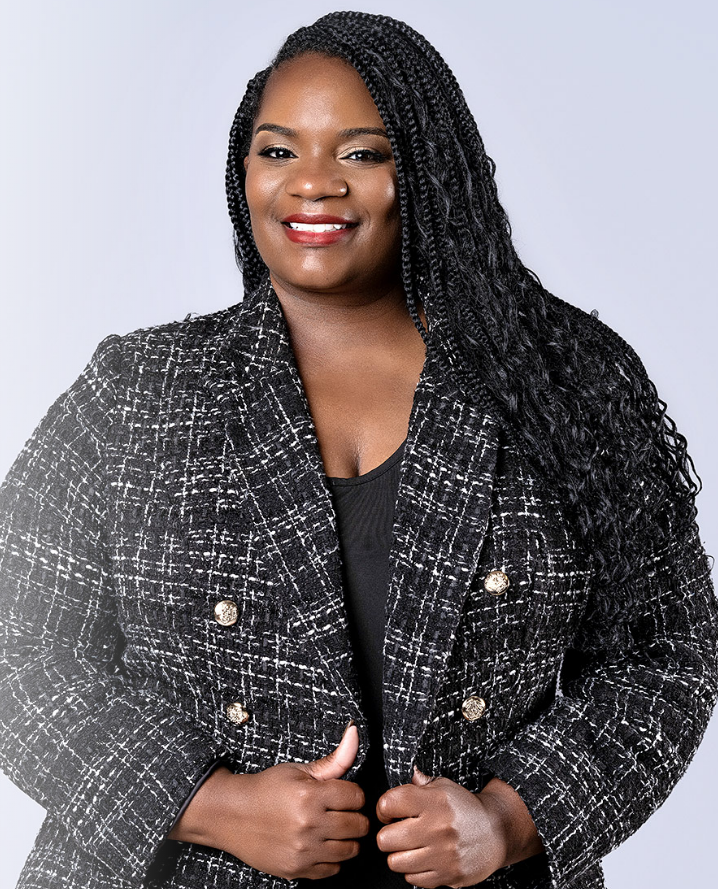
April Baskin
Long before today’s headlines, Black communities lived under mass arrest, family separation, government surveillance, medical betrayal, voter suppression, and state sanctioned violence. What’s happening in the United States today feels shocking, unthinkable for a modern democracy. But what feels shocking to the nation feels familiar to us. That is why Black History Month is not only about remembrance; it is about recognition. Black History Month cannot be confined to celebration alone. It must also be a warning and a guide.
Because every horrid headline in America today has a parallel chapter in Black American history. But by going back and reading those chapters, we will learn something essential: how people survive when the government meant to protect them becomes a source of harm.
Last month, we saw dozens of protesters arrested in Manhattan for staging a sit-in inside a hotel where federal immigration officers were staying. They were detained, loaded into buses, and charged for exercising their right to dissent. Black history tells us that this tactic is not new. During the Civil Rights Movement, Black Americans participating in sit-ins at lunch counters and public spaces were routinely arrested on bogus charges like loitering or disturbing the peace. These sit-ins were acts of courage in the face of a system determined to maintain segregation’s racial hierarchy. What is called “law and order” today has long been used as a tool of control.
On Jan. 24, the world watched as Alex Pretti, a public servant who took care of America’s veterans as a nurse, was fatally shot, murdered by federal officers. His death is now under a civil rights investigation. In 1962, Roman Ducksworth Jr., a military police officer going to visit his wife and newborn at the hospital, was ordered off a bus after he was mistaken for a freedom rider and shot dead by police. Both men served this country. Both were killed by those sworn to uphold the law. Black history reminds us that far too often, badges have been used as shields from accountability.
Today, public health decisions are being made with out scientific justification - restricting vaccines and cutting critical HIV and cancer research funding. Black Americans remember when the federal government deliberately withheld treatment during the Tuskegee Syphilis Study, allowing more than 100 Black men to die so their suffering could be documented. That betrayal taught us a hard lesson: when science bends to politics, public trust erodes and people die.
Today, reproductive rights are being rolled back. Roe vs Wade has been overturned. Access to IVF is being threatened. Women in low income communities are losing access to care due to Medicaid cuts. None of this is new to Black women. In the 20th century, thousands were forcibly sterilized without consent in federally funded hospitals. Fannie Lou Ham mer was one of those women, who, in 1961, was given a hysterectomy without her consent while undergoing sur gery to remove a fibroid. This procedure was so common it earned a disturbing nickname: “Mississippi appendectomy.” Control over women’s bodies and reproductive choices have always been political. Black women just experienced it first.
Twelve days after 5-year-old Liam Conejo Ramos and his father were detained by immigration officers outside their Minneapolis home and held at an ICE facility in Texas, they were reunited with their loved ones. Officials from Liam’s school say immigration agents used the little boy as bait to get family members inside his home to come to the door. During slavery, Black families lived every day under the threat of having their children taken away from them. Family separation was a standard and deliberate practice of slave owners, who sold the spouses of enslaved “trouble makers” as punishment, or gifted enslaved children as wedding gifts to their own adult children. Though we are happy Liam and his father are home where they belong, we remember the Black slaves never got to be reunited with their families.
Last year, under Elon Musk’s DOGE, the Veterans Affairs Department cut 30,000 positions - many held by veterans. Transgender military members are being forced out of service. After World War II, Black veterans were denied the promises of the GI Bill. They were locked out of homeownership and higher education while white families built generational wealth. Service did not equal protection then, and it often doesn’t now.
Recently, we’ve seen renewed efforts to restrict the right to vote under the language of “election integrity.” Republicans in Congress are proposing bills that would limit access to mail-in voting, impose national photo ID requirements, and force voters to prove their citizenship to register. Black Americans know this playbook. For gen erations, literacy tests, poll taxes, grandfather clauses, and felony disenfranchise ment were used to exclude Black voters while maintain ing the appearance of legality. The tactics have changed but the goal remains the same: to narrow democracy by deciding whose voice counts and whose doesn’t.
So, when Americans ask, ‘How do we survive this moment?’ Black history answers: we already have. Black Americans endured slavery, lynching, segregation, medical abuse, family separa tion, voter suppression, and state violence, often all at the same time. We did not survive because the system protected us. We survived because we learned how to endure when it did not.
I believe that this year, the centennial year of the formal celebration of Black His tory in the United States, that Black History can be more than reflections and homage to progress of Black culture in our country. This year I believe that Black History Month must serve as a tem plate for Americans to remind us that even in the darkest hours of oppression, survival is possible.